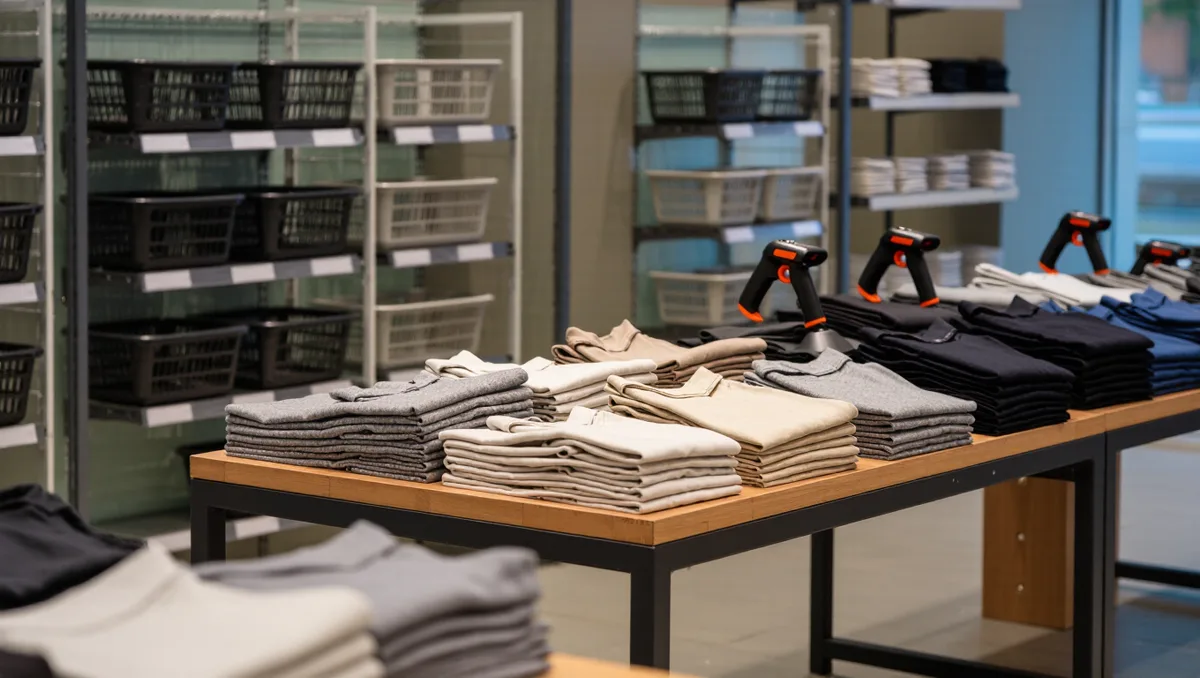
Everyone thinks they know retail. Walk a store, stack a shelf, ring a sale. In truth, the trade runs on a set of ideas few customers ever see.
This guide explains how a store really works and the skills that quietly decide who moves up. It is retail, minus the training video.
Retail Is the Last Link
Retail is the sale of goods and services to consumers, in contrast to wholesaling, which sells to business or institutional customers. A retailer buys in bulk from manufacturers or wholesalers, then sells in smaller amounts for a profit. Wikipedia's retail overview calls retailers the final link in the supply chain from producers to consumers.
That position shapes every shift. The store is where the whole chain either works or fails. When the shelf sits empty, the blame flows backward fast, and the person who spots it first looks good first.
The Six Ps Behind Every Store
Retail strategy gets summarized as six Ps: product, place, promotion, price, personnel, and presentation. Each one maps to a task you can see on the floor.
Product and price decide what goes in the basket. Place covers location, operating hours, and how easy the store is to shop. Promotion drives the visit, while personnel and presentation decide whether people stay, return, and tell friends. Watch a good store manager for one hour and you will see all six Ps in motion.
Pricing Is a Toolbox
Pricing has more gears than a sticker suggests. Retailers use discounts, everyday low pricing, high-low pricing, loss leaders, bundling, and psychological pricing, to name the standard set. Readers following this should also see Loss Leaders Explained: Why Stores Sell Some Items Below Cost.
Workers who understand these tools stock smarter. Loss leaders pull traffic, so the sale item must stay full. Bundles move slow stock, so the shelf plan shifts with the promo calendar. When you know why an item sits where it sits, you can predict what the store will run out of next.
People Skills Are the Product
Most modern retailers treat customer service as strategy, not staffing. Strategic decisions include the market to be served, the product assortment, supporting services, and the store's overall market positioning.
The human skills are learnable. Read the customer before you speak, offer one clear solution instead of five options, and close the loop after the sale. Stores remember workers who turn problems into return visits, because those workers change the numbers.
The Schedule and the Path Up
Retail labor needs vary by time and season, which supports flexible scheduling. One cited estimate holds that in 2012, about 70 percent of United States retail workers were part-time. Hours flex, so reliability quietly becomes a superpower.
Stores have also expanded omnichannel work, such as buy online and pick up in store. Workers who learn both sides of that flow become the natural picks for lead roles, because they can see the whole store instead of one counter. Some firms have even tested automation, including cashierless store formats, which shifts human work toward service and away from the register.
The path up follows the same logic. Learn the floor first, then the flow, then the numbers. Every layer adds a skill that the layer above assumes you already have.
Conclusion: Learn the Floor, Learn the Trade
Retail looks simple because it is practiced in public. Under the surface sits a supply chain, a pricing system, and a service craft that takes years to polish. The best workers make all three look easy, which is exactly why the trade is so often underestimated.
Master the six Ps, treat scheduling as a skill, and own the customer problem in front of you. None of it needs a degree, and all of it shows up in the numbers a manager reads every week. That is the part of retail nobody teaches, and the part that gets noticed first. We covered a connected angle in What Is RFID in Retail? How Stores Track Every Item — and What It Means for You.