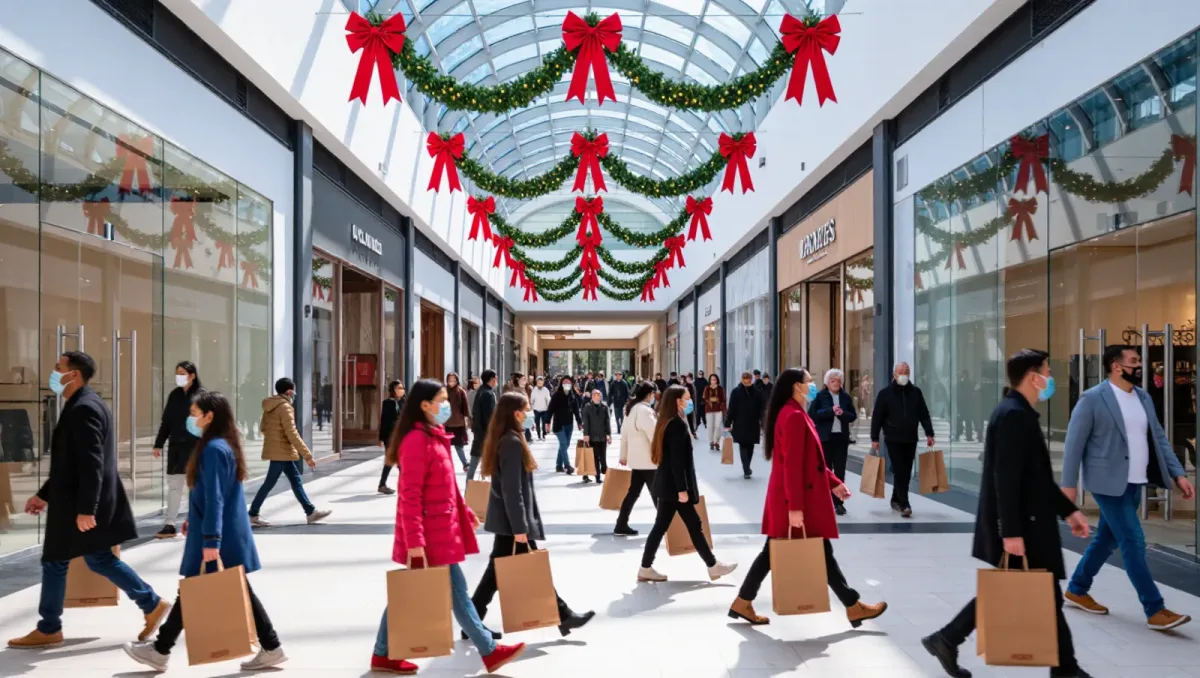
Holiday sales in the United States were on track to exceed $1 trillion for the first time, per the National Retail Federation's forecast announced in November 2025, which projected growth of 3.7% to 4.2% over 2024 for the November-to-December shopping window. Spending through the season tracked at the top half of that range: the CNBC/NRF Retail Monitor, powered by Affinity Solutions, reported through late December that holiday spending was running strong, and the season closed with growth around 4.1% — inside, but near the ceiling of, the forecast.
For shoppers, the number is less a celebration than a benchmark: it tells you how much pricing power retailers felt they had.
What does a $1 trillion season actually measure?
The NRF definition covers November 1 through December 31 and excludes automobile dealers, gas stations, and restaurants. It is a demand reading, not a discount reading — and a strong season means retailers needed fewer aggressive markdowns to clear inventory. Shoppers who waited for the deepest late-December cuts in 2025 often found thinner selections at prices only modestly below early-season levels, a pattern consistent with strong aggregate demand.
What does the growth rate change for you?
A 4.1% nominal increase (per NRF reporting, January 2026) sits above recent inflation readings, meaning real volumes grew as well. Strong seasons historically produce two follow-ons worth watching in the new year: fewer clearance events in January, and retailers carrying confidence — and pricing discipline — into spring. Conversely, categories that underperformed the headline (electronics and toys had mixed seasons in recent years) are where the January bargains concentrated.
Which numbers should a shopper trust?
- NRF headline: trade-association measure, forecast-led, useful for direction; its definition is broad.
- CNBC/NRF Retail Monitor: card-transaction data from Affinity Solutions; weekly, so it catches shifts faster but misses cash.
- Census Bureau monthly retail sales: the government survey anchor; December data releases in mid-January.
The three measures rarely agree exactly — the card-based monitor has run hotter than Census figures for much of 2025 — so treat any single holiday number as an estimate with a definition attached.
What happens to prices now?
The practical read for January through March: apparel and seasonal goods hit hard by a strong season will see ordinary end-of-season clearance, while categories that carried the season keep full-price shelf space longer. Shoppers with flexible lists should still shop clearance in mid-January; the difference from a weak year is that the deepest markdowns will be earlier and shorter. Clearance windows are compressing as inventory data gets better — the month-long clearance cave of the past is now closer to two weeks at many chains.
Figures per NRF and CNBC/NRF Retail Monitor reporting as of January 2026; Census Bureau December retail sales data will refine the picture at its mid-January release.