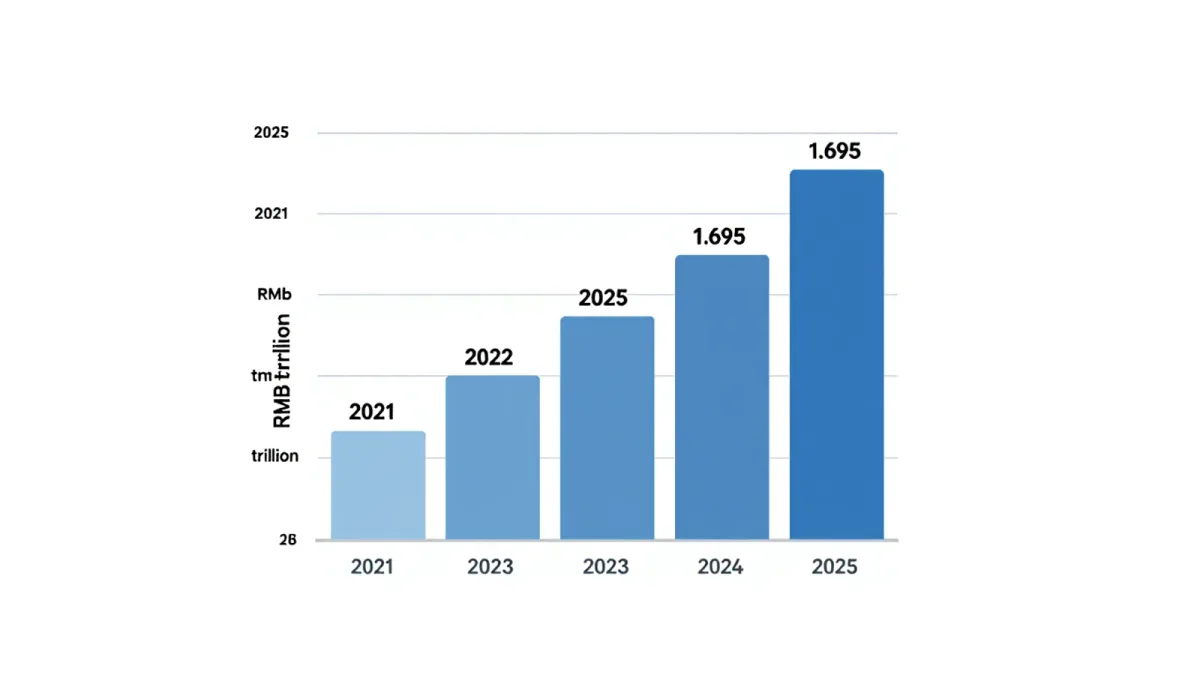
Singles Day 2025 generated an estimated RMB 1.695 trillion (about USD 236.6 billion) across Chinese e-commerce platforms, up 17.5 percent year on year, per eMarketer estimates published after the November 11 event closed. The catch for anyone using that number as a shopping signal: Alibaba and JD.com have not published headline sales figures since 2022, so the total is a third-party estimate, and the 17.5 percent gain partly reflects a longer event — five weeks in 2025, up from 28 days in 2024.
This is data coverage, not a buying recommendation: festival pricing is promotional, and cross-border shoppers should verify every price against the platform's own 30-day history before treating a discount as real.
What actually grew in 2025?
Per ECDB breakdowns, Alibaba held roughly 55 percent of event GMV and JD.com about 29 percent, with household appliances, phones, and clothing together near 37 percent of sales. China's government trade-in subsidies did heavy lifting in appliances and electronics, and live-stream commerce kept expanding. The growth number is real; the interpretation is not straightforward. A longer window spreads the same demand thinner, which is exactly why the platforms stopped boasting — a record total no longer means a record day.
Why did Alibaba and JD stop reporting GMV?
Both companies shifted after 2022 to qualitative metrics — user growth, member numbers, merchant participation — because year-on-year GMV comparisons became unflattering as the event stretched. For a shopper, this matters in one practical way: without a published daily total, nobody outside the platforms can tell you whether November 11 itself still carries the deepest cuts, or whether the deals are spread evenly across the five weeks. The evidence from trackers suggests the latter, which argues for buying when the item hits your target price rather than waiting for the nominal day.
What does this mean for cross-border shoppers?
For buyers outside mainland China, the 2025 edition reinforced three rules. First, the deep appliance and electronics subsidies are domestic programs — mainland ID requirements usually exclude foreign cards and addresses, so don't plan a purchase around them. Second, platform-wide totals say nothing about the item you want; category discounts vary widely. Third, returns across borders remain the weakest link: international returns on marketplace orders often cost more than the discount was worth, so treat Singles Day prices as final-sale prices until you have checked the seller's return terms.
As of early February 2026, no platform had revisited its decision to withhold headline figures, and the next test of the format arrives with the mid-year June 18 event, where the same quiet-reporting pattern is expected to hold.