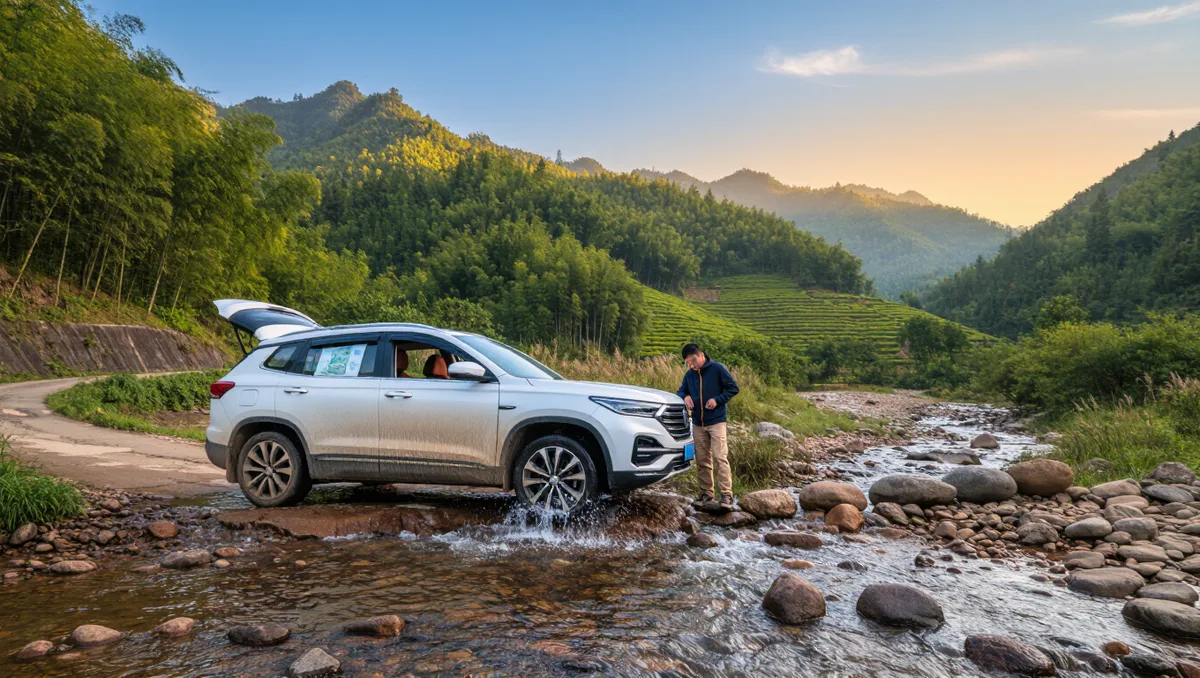
On October 21, at the 2026 JETOUR Global Technology Experience Day in Moganshan, Zhejiang, a group of media representatives, influencers, and owners drove SUVs through water crossings, cross-axle sections, and crested ramps. The point, according to Markets Insider, was to show off two pieces of technology with unfamiliar names: XWD Intelligent 4WD and the GAIA architecture. Both are aimed at the same reader question — does off-road driving still require years of skill, or can the car do the hard part?
The short answer from the company: it wants the car to do the hard part. JETOUR says its system translates an experienced driver's terrain judgment into algorithms, so a newcomer can pick a mode — or press one button — and let the vehicle handle power distribution and traction. For travelers, that matters in a practical way: rental fleets, dealer showrooms, and the luxury market are all getting vehicles built this way, and knowing what the labels mean helps you ask the right questions before you pay. We covered a connected angle in China's May Day Holiday Spending Rose 2.9 Percent to ¥185.49 Billion — but Travelers Spent Less per Trip.
This piece unpacks what was actually demonstrated, what the two systems do, and why a car press release shows up in your travel news feed at all. Readers following this should also see Dubai Shopping Festival 2026 Wrapped January 11 — What the Mega Sales Actually Delivered.
What happened at the Moganshan test drive?
The event took place on October 21 in Moganshan, in China's Zhejiang province. Drivers took JETOUR's T Series and G Series vehicles through three kinds of obstacles: water crossings, cross-axle sections (terrain angled so that wheels on one side sit higher than wheels on the other), and crested ramps. According to the company's announcement, the T Series completed water crossings, water-fording bridges, and cross-axle sections during the drive.
The setting was deliberate. Moganshan is wilderness terrain, not a test track, so the obstacles were the kind a traveler might actually meet on a rough route to a trailhead or a remote stay.
What is XWD Intelligent 4WD, in plain terms?
Four-wheel drive sends engine power to all four wheels instead of two. Traditional off-roading adds a second skill: knowing when to switch drive modes and when to lock the differential — a mechanism that forces wheels on the same axle to spin together so a spinning wheel stops wasting power. Get it wrong and you're stuck in the mud with the engine screaming.
JETOUR's pitch is that XWD removes that judgment call. As wheel grip changes, the system adjusts power distribution on its own, and an electronic "jaw-type" differential lock helps regain traction when a wheel slips. Drivers can choose from seven modes — Eco, Standard, Sport, Snow, Mud, Sand, and Rock — or press a single "X" button for an intelligent off-road mode that handles terrain sensing and power control itself. The company frames this as making off-road driving accessible to a broader set of users, not just seasoned four-wheelers.
What is the GAIA architecture, and why does it mention luxury?
GAIA is the platform under the G700, JETOUR's premium model. It pairs a super hybrid powertrain — a hybrid system built to cope with varied road conditions — with CDC intelligent suspension and air suspension. In plain language: the suspension adjusts its damping and ride height automatically on uneven or potholed surfaces, so the ride stays comfortable while the vehicle still climbs.
The cabin side is where the luxury language comes in. The G700's interior includes a four-screen smart cockpit, multifunction seats, and high-quality audio. The company's framing is that off-road performance and comfort no longer have to be a trade-off.
Why should a shopper or traveler care?
Three reasons, all grounded in what the announcement says about the brand itself. JETOUR launched in 2018 and now operates in more than 100 countries and regions, with over 2,000 sales and after-sales service outlets and a global user base the company puts above 50 million. Its research network spans the EU, the Middle East, Central and South America, and ASEAN. That footprint means these vehicles — and this technology — will increasingly appear in the places travelers rent cars and browse showrooms.
Second, the product split tells you where the market is heading. The T Series targets the light off-road segment; the G Series is positioned for the premium luxury off-road market. The company says the lineup covers urban commuting, family road trips, outdoor camping, and long-distance journeys. If you follow the luxury end of travel spending, this sits alongside the goods you already track — the same market forces covered in our look at the personal luxury goods forecast for 2026.
Third, the "Travel+" strategy. JETOUR describes itself as committed to building products around global users' mobility requirements, with off-road capability as a key part of expanding travel possibilities. In other words, the brand is selling trips, not just vehicles — which is exactly the kind of retail positioning shift worth watching from the shopping side of the aisle.
What should you actually check before you buy or rent?
Everything above comes from the company's own announcement, delivered at its own event. That's the honest caveat: JETOUR demonstrated its systems to invited media and users in terrain it chose, and the performance claims are the manufacturer's, not an independent test. Before committing money, the practical steps are the ones you'd apply to any vehicle purchase abroad:
- Ask which features are on the specific trim in that market, since equipment varies by country.
- Confirm after-sales coverage — the company cites more than 2,000 service outlets globally, but coverage near your route is what counts.
- Test the terrain you'll actually drive, not the terrain a demo chose.
What the evidence establishes is a clear product direction: automation of off-road skill at the mid-market, and comfort-led off-roading at the premium end. What it doesn't establish is how these systems perform outside a company-run course — that remains unknown until independent testing exists.