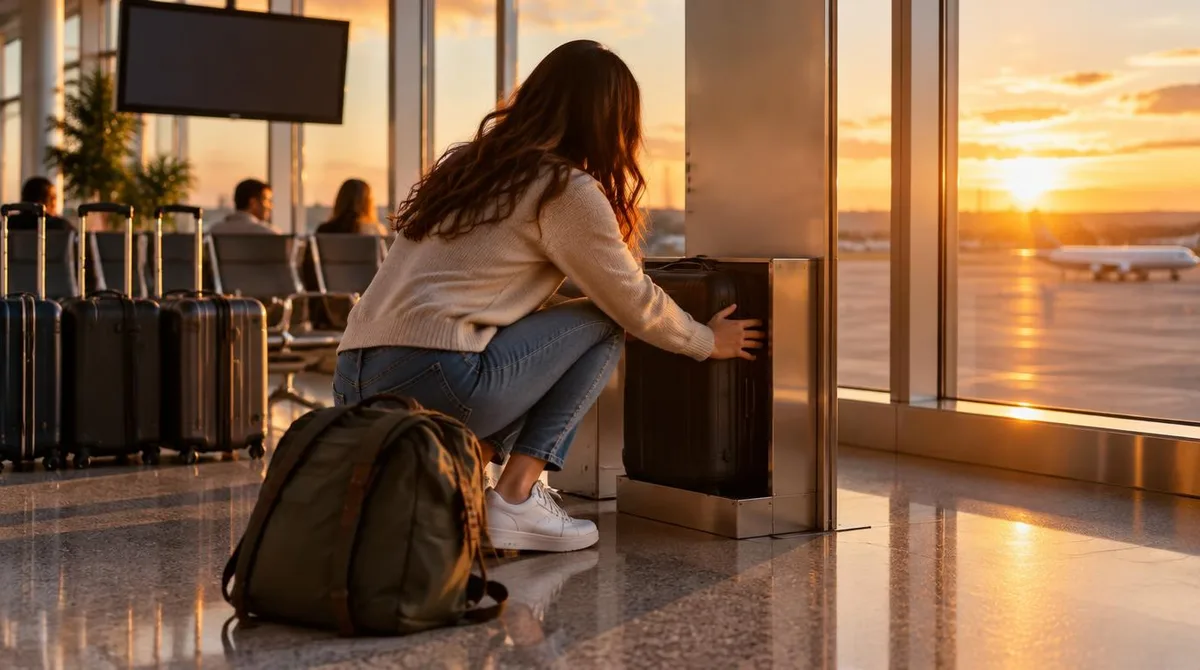
Start at any gate on a Tuesday morning and you'll see it: rows of soft-sided suitcases, all roughly the same size, squeezed into the sizer box one after another. A growing share of travelers refuse to check a bag. They board with one roller and one personal item, and they plan the whole trip around it.
The reason is not hard to find. Airlines charge separately for checked bags on most domestic fares, and that fee has a way of growing — per bag, per direction, per add-on. A carry-on is free on many tickets, so the suitcase that fits in the overhead bin became the cheapest luggage in the sky. The word itself is plain. According to the Cambridge Dictionary, to carry is simply "to take or support from one place to another" — which is exactly what the movement asks of the traveler, and exactly what the airlines have made harder.
What this means for you is straightforward: carry-on-only travel works, it saves money on most fares, and it demands more planning than checking a bag. Here is how the shift happened, what it costs, and what to watch for before you zip that bag shut.
Why did so many travelers stop checking bags?
The economics came first. Once checked baggage became a separate line item rather than part of the fare, every checked suitcase turned into a visible cost the traveler could avoid. Avoiding it required one skill: packing less. So people learned.
The gear industry met them halfway. Soft-sided rollers in carry-on dimensions, compression packing cubes, and jackets with deep pockets all exist because a market of fee-avoiding travelers asked for them. Luggage makers now sell "carry-on" as a category, not a size limit, and the bags keep being engineered to the maximum dimensions airlines allow — sometimes a centimeter past what the sizer forgives.
There is a second driver nobody advertises: speed. A carry-on traveler walks off the plane and out of the airport. No baggage claim, no carousel wait, no claim ticket to lose. On a short trip, that can save close to an hour each way, which matters more than the fee to many business travelers. We covered a connected angle in China's May Day Holiday Spending Rose 2.9 Percent to ¥185.49 Billion — but Travelers Spent Less per Trip.
How did the airlines respond?
The airlines noticed the revenue walking past the check-in counter, and they pushed back in three ways.
First, some carriers split the cabin into fare classes where even a full-size carry-on costs money, leaving only a personal item free on the cheapest tickets. The bag that used to be included now sits behind a paywall on basic economy fares. Second, carriers tightened enforcement of the sizer. Gate agents with bag gauges became a common sight at boarding, and a bag that squeaks by at the check-in desk can fail at the gate — often with a higher penalty there than at the counter. Third, overhead bin space itself became a product. Some airlines sell priority boarding largely on the promise of bin space, which is another way of saying: pay, or your roller gets gate-checked.
The honest caveat is the house signature of this story: the carry-on is free — until it isn't. Whether it is free depends on the fare you bought, the airline you bought it from, and the mood of the gate that morning. Check the specific fare rules before you book, not after.
What actually fits in a carry-on?
More than you'd think, if you treat the bag as a system rather than a closet. Experienced one-bag travelers converge on the same moves, none of which require special gear:
- Pack for the trip, not the wardrobe. Three shirts worn in rotation beat seven shirts worn once.
- Wear the heaviest items on the plane. Shoes, jacket, jeans — the bulk goes on your body, not in the bin.
- Liquids follow the airport's security rules, which limit container size and require a clear bag in most jurisdictions. Solid versions of the same products — bar shampoo, stick sunscreen — skip the problem entirely.
- Buy the bulky consumables at the destination. Toothpaste and sunscreen are sold everywhere; there is no prize for flying them across an ocean.
- Leave room. If you plan to shop — and on this site, we assume you do — a full bag on the outbound is a problem on the return.
That last point is where carry-on-only travel collides with shopping. A traveler who buys ceramics, textiles, or olive oil faces a choice: ship it, check a bag on the way home, or carry it and hope it fits. Our duty-free allowances guide and the piece on what US customs duty you'll actually pay on souvenirs cover what comes back with you; the packing question is the other half of the same decision. Readers following this should also see How Much Can You Bring Home Duty-Free From a Shopping Trip?.
What should you watch for before you fly?
Three checks, in order.
One: read the fare, not the airline. The same carrier can include a carry-on on one fare and charge for it on another. The fare rules page, not the marketing banner, is the truth.
Two: measure the bag, including wheels and handles. Airline sizers count the whole object. A bag marketed as "carry-on sized" can still fail the gauge of a stricter carrier, and regional jets have smaller bins than mainline aircraft regardless of the rules.
Three: plan the failure mode. If the gate agent gate-checks your bag, what breaks? Anything valuable, fragile, or needed on arrival — medicine, documents, electronics — belongs in the personal item under the seat, never in the roller. That habit costs nothing and rescues the worst day at the gate.
Our analysis: the movement is durable because it was built by pricing, and pricing rarely reverses. As long as checked bags cost extra, a meaningful share of travelers will pack to the sizer. The airlines' counter-moves — charging for the cabin bag itself and selling bin priority — suggest the next battleground is not the checked bag but the overhead bin, which is finite and now monetized. The traveler's answer stays the same: smaller bag, sharper packing, and the rules read before booking.
The bottom line for one-bag travelers
Carry-on-only travel trades a fee for discipline. You save the checked-bag charge, skip the carousel, and walk out of the airport faster — if your bag fits, your fare allows it, and you packed for the trip you're actually taking. None of that is guaranteed by the luggage tag that says "carry-on." It's guaranteed by you, checking the fare rules and the sizer dimensions before you leave the house.
For more on what you can bring home and what it will cost you at the border, our travel news desk follows the rules as they change.