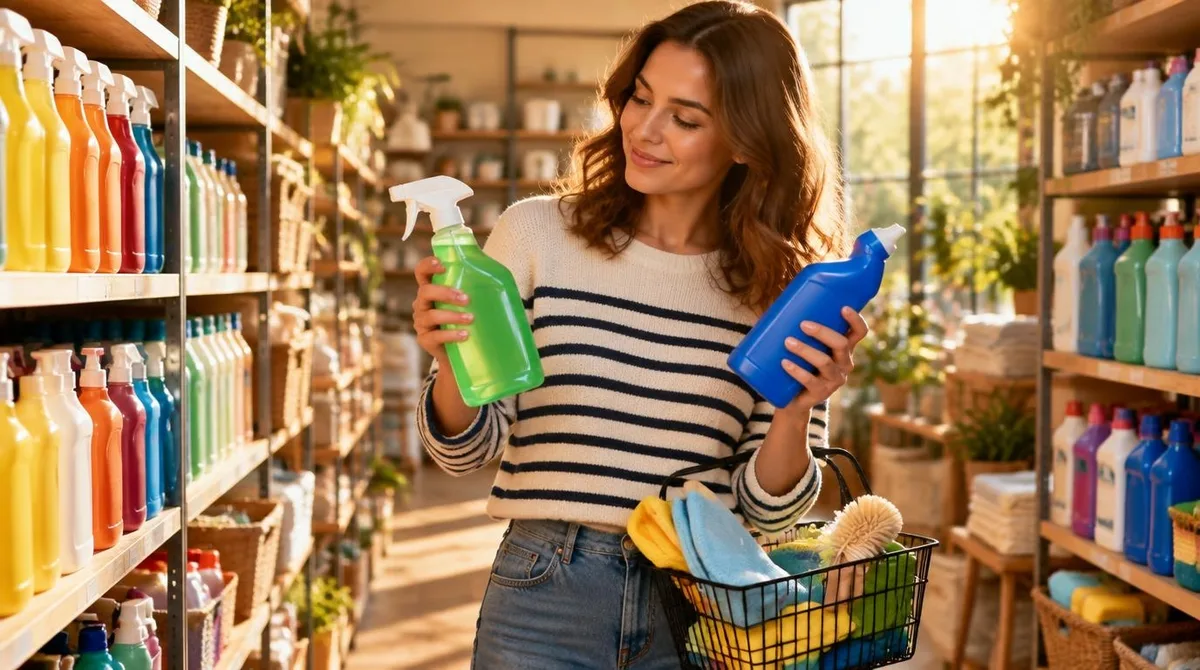
The best cleaning products aren't the ones with the loudest label. They're the ones matched to the surface and the mess in front of you. Most homes need surprisingly few: one all-purpose cleaner, one bathroom disinfectant, one glass cleaner, one gentle scrub, and the right tools. Skip the rest and you'll save shelf space and money.
The caveat matters as much as the list. A cleaner that shines a sealed countertop can dull a natural stone one. A degreaser that strips kitchen grease can also strip a wood finish. Read the surface label on the bottle before the marketing label, and test anything new in a hidden spot first.
What should be in a basic cleaning kit?
Start with five products and a handful of tools. That covers nearly every room in an average home. We covered a connected angle in What the $800 Duty-Free Exemption Actually Covers When You Fly Home With Shopping.
- All-purpose cleaner. For counters, cabinets, appliance exteriors, and most sealed surfaces. Choose a neutral pH formula if you have stone or wood nearby.
- Bathroom cleaner with disinfecting claims. For tubs, toilets, and sinks. Look for a product registered to make disinfecting claims and follow the contact time on the label.
- Glass cleaner. Windows, mirrors, and shiny fixtures. A streak-free finish usually comes from the cloth as much as the liquid.
- Non-abrasive scrub or cream cleanser. For baked-on stove mess and sink grime without scratching.
- Floor cleaner matched to your floor. Hardwood, laminate, vinyl, and tile each want a different formula. The flooring manufacturer's guidance beats the bottle's.
Tools matter more than shoppers expect. Microfiber cloths pick up fine dust that cotton rags push around. A good scrub brush with stiff bristles handles grout. A squeegee keeps shower glass clean with almost no product at all.
Which products work room by room?
Kitchens need degreasing power. Look for a dedicated degreaser for the stovetop and range hood, where cooking film builds up. Dish soap cuts grease too, and it's gentle enough for most surfaces. For the inside of the fridge, a mild all-purpose cleaner or diluted dish soap is usually all you need.
Bathrooms need products that handle soap scum, hard water spots, and germs. Soap scum removers are usually mildly acidic, which is why they work where all-purpose cleaners stall. Keep toilet bowl cleaner separate; it's formulated thicker so it clings under the rim.
Living areas need almost nothing. Dust with a dry microfiber cloth, spot-clean upholstery with a product labeled for fabric, and vacuum. Upholstery is the one place to read labels carefully: some fabrics are water-cleanable and some are solvent-clean only, and the tag tells you which.
Floors are the most common place to cause damage. Steam mops and wet cleaners that promise shine can void a hardwood or laminate warranty. Check the flooring maker's care instructions before you mop with anything beyond what it recommends.
Do natural and DIY cleaners actually work?
Some do, for some jobs. Baking soda is a mild abrasive that scrubs sinks and tubs without scratching most surfaces. Distilled white vinegar cuts mineral film on glass and fixtures. But vinegar is acidic, so it's a poor match for natural stone like marble, which acid can etch.
The bigger limit is disinfection. Homemade mixes generally aren't registered to make disinfecting claims, and mixing certain ingredients is genuinely dangerous. Bleach and vinegar, for example, should never be combined. If your goal is killing germs, use a product whose label states that it disinfects, and give it the full contact time listed.
Our analysis: keep a small DIY kit for scrubbing and shine, and a registered disinfectant for the jobs where germs matter. That split gets the benefits of both without the risks.
What should you watch for before you buy?
Three checks save the most money and trouble.
- Read the surface list. The back label states what a product is safe for. If your surface isn't listed, don't assume it's fine.
- Check concentrated versus ready-to-use. Concentrates cost less per use but require diluting. If you won't measure, buy ready-to-use and skip the waste.
- Ignore the scent story. Fragrance tells you nothing about how well a product cleans. Unscented versions often cost the same and work the same, with less lingering smell.
Also watch storage. Keep products in their original bottles so the directions and warnings stay with them. Never decant bleach or ammonia into drink containers, and store them where children and pets can't reach.
How do you build a kit without overspending?
Buy the cheap workhorses and spend only where performance differs. Dish soap, baking soda, and microfiber cloths are commodity items; the store brand is usually fine. Where premium products earn their price is in specialized jobs: a good soap scum remover, a degreaser that actually cuts baked-on grease, and a floor cleaner your flooring maker approves.
Value shows up over time, not on the shelf tag. A concentrate you dilute lasts longer than a spray bottle. A tool that works, like a squeegee or a stiff grout brush, replaces product entirely. If you're comparing prices across stores, a price tracker can help you time the purchase; our guide to comparison shopping apps and price trackers covers which tools actually save money. For related coverage, see Comparison Shopping Apps and Price Trackers: Which Tools Actually Save Money.
Shopping for a home also means shopping for what's inside it. If you're furnishing a space, the care a piece needs starts before you buy it. Best Home Furnishings makes the point plainly on its site: when you buy a chair, recliner or sofa, you're buying more than furniture, and its pieces are built to be customizable to fit your life, style and space. A fabric you can wipe clean beats a delicate one you can't, especially in a busy household.
What this means for your next shopping trip
The evidence here is practical, not statistical: match the product to the surface, keep the kit small, and let labels rather than marketing make your choices. You don't need a bottle for every room. You need the right five, stored safely, used as directed.
Start with the basics, note which jobs they don't handle, and add one specialized product at a time. That way every bottle in your cabinet earns its space. And if your shopping runs beyond the hardware aisle, the rest of our guides cover everything from luggage that survives the carousel to reading a hotel rate past the resort fee.