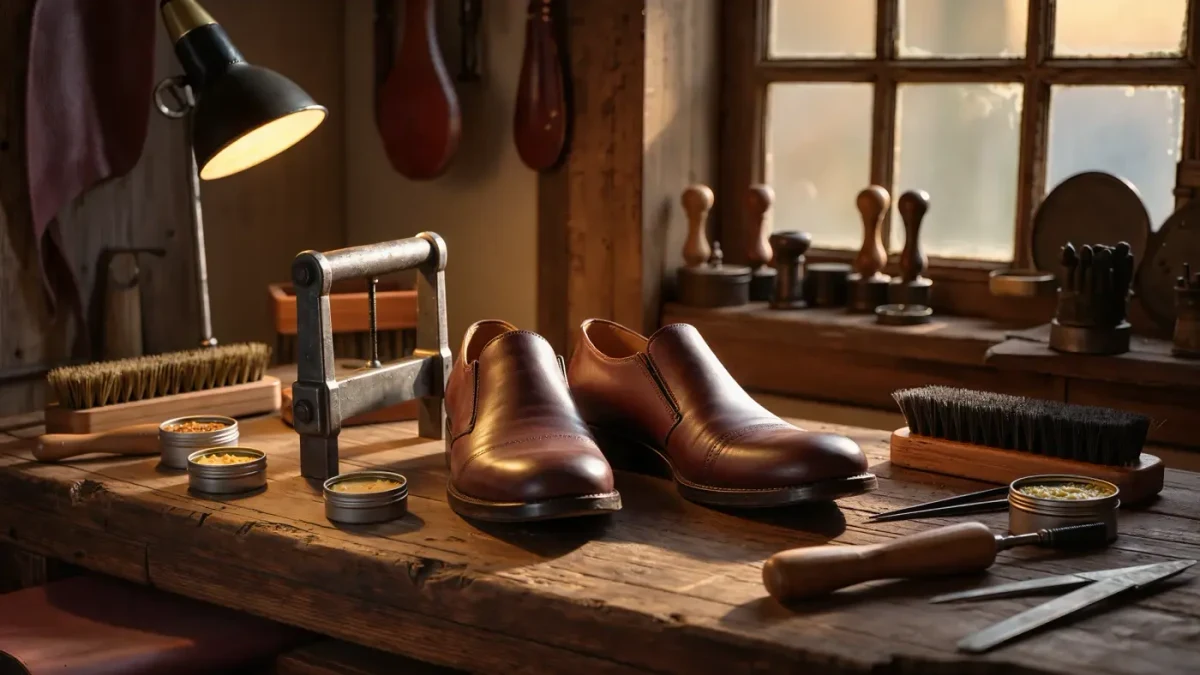
A well-made pair of Italian or Portuguese leather dress shoes starts around €180–€250 retail in Europe (checked April 2026), and the price is justified — or not — by construction you can verify in two minutes with your hands and a phone light. The country label tells you where the shoe was assembled; it does not tell you whether it was assembled well. Both countries produce world-class footwear and mediocre footwear, sometimes under the same roof for different brands.
Prices are illustrative and re-check locally; this is consumer information, not purchasing advice.
What does "made in Italy" actually guarantee?
Less than shoppers assume. EU labeling rules require that the country of origin reflect where the product obtained its principal manufacture, but components can cross borders — an Italian-labeled shoe may use hides tanned elsewhere, and "designed in Italy" on a non-EU label means precisely nothing about where production happened. Portugal's footwear industry, concentrated around Porto, has spent two decades building its own reputation as a manufacturing base for both European and American premium brands; a well-made Portuguese shoe is not a discount on quality, it is often the same factory tier at a lower price. Treat the label as a clue, then verify the shoe itself.
Which construction should you look for?
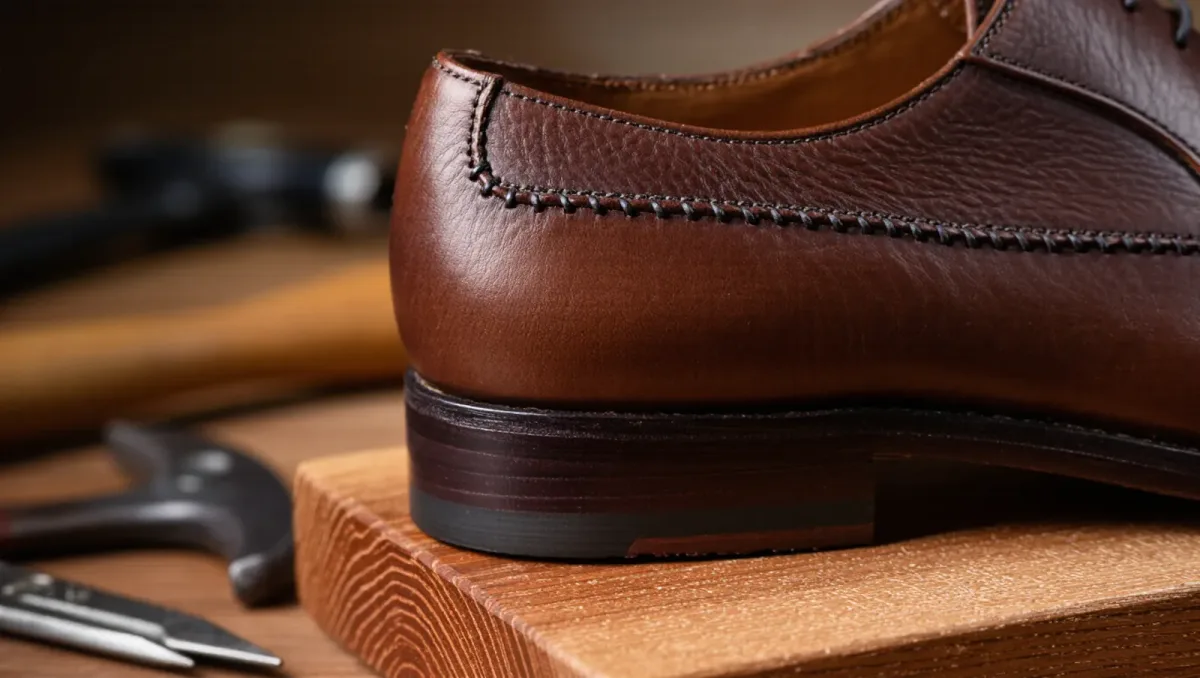
- Sole attachment: a Goodyear welt or a stitched sole is the signature of repairable footwear — you'll see a visible stitch line running around the sole's edge. A glued ("cemented") sole is fine at €90 but weak justification at €300.
- Upper leather: full-grain leather shows natural pores and slight irregularities; heavily corrected, plastic-feeling leather with a uniform shine is the cheaper cut. Press the toe: good leather creases like skin, not like paper.
- Insole: leather insoles under your fingers, not cardboard. Bend the shoe gently — it should flex at the ball, and the insole shouldn't crackle.
- Heel: stacked leather heels are built in layers; a plastic heel shell on a €300 shoe is a cost cut.
- Lining: a full leather lining, including under the tongue, is standard at the quality tier Italian and Portuguese workshops sell into.
What does each tier actually cost?
| Tier | Typical price (checked April 2026) | What you should get |
|---|---|---|
| Entry premium | €120–€180 | Leather upper and lining, cemented sole |
| Core quality | €180–€350 | Blake or welt stitching, leather insole |
| Workshop tier | €350–€600 | Goodyear welt, full leather construction, resoleable |
Portuguese-made shoes of the same construction commonly price 10–20% under comparable Italian-labeled pairs, reflecting brand premium as much as cost.
How do you spot the fake premium?
The pattern to watch is the leather-feel upper on a fully glued shoe with a cardboard insole, priced at the €300 tier because the storefront is expensive. Check the two cheapest things to fake — the insole material and the heel — because factories that cut there cut everywhere. "Genuine leather" stamped on the sole edge is legally meaningless: it describes the material, not the grade. Real full-grain leather needs no such reassurance on the hangtag.
Where should you buy?
At home: independent shoe stores in Italy and Portugal will tell you which of the brands they carry they'd repair, and repairability is the whole test. Small workshop brands — of which both countries have hundreds — sell direct at prices below their export retail. A pair that can be resoled three times at €60 a service (checked April 2026) spreads its cost over a decade of wear, which is the honest math behind the higher sticker price.
The two-minute verdict
Feel the insole, find the stitch line, press the toe, check the heel. If all four pass, the label barely matters — but you'll usually find it says Italy or Portugal anyway, because that's where the stitching is still done by people whose names the factory knows.