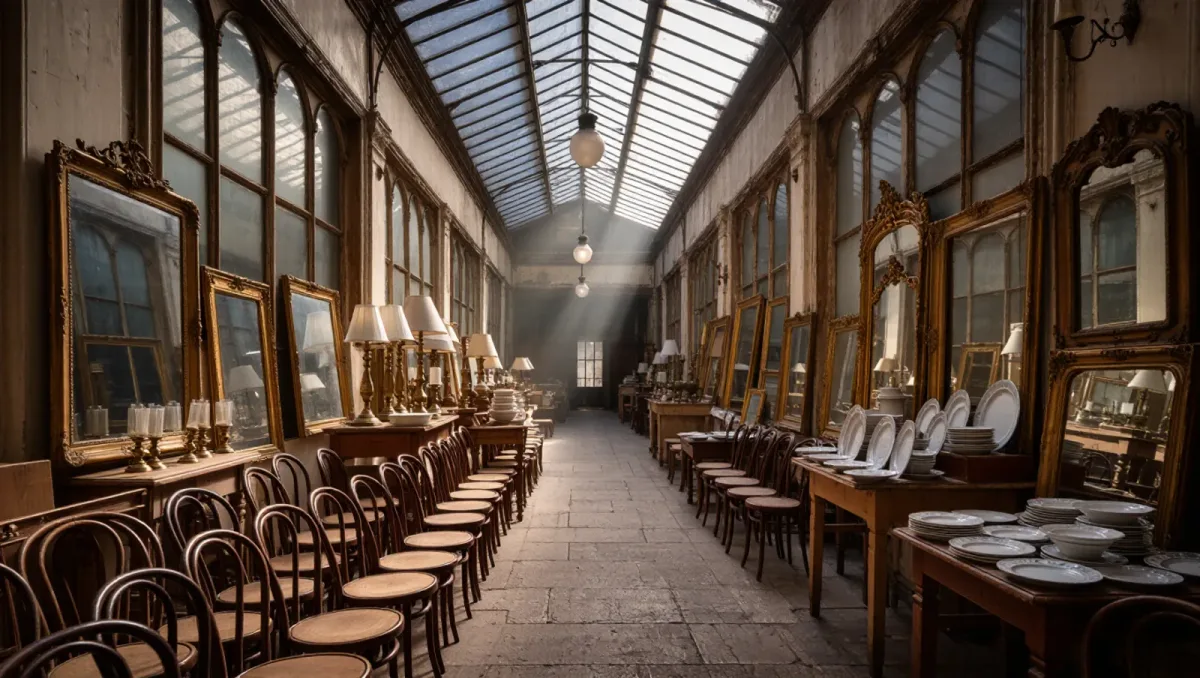
Les Puces de Saint-Ouen covers about seven hectares and roughly 2,000 to 2,500 dealers across a dozen specialized markets, per the market's own trader association information, checked March 2026. The honest price map: true bric-à-brac starts at €5–€20, mid-century furniture and vintage fashion run €100–€800, and gallery-grade art and design pieces start in the thousands. It is not one market — it is a city of markets, and knowing which “village” you are standing in matters more than haggling skill.
Most visitors have 3–4 hours and want a clear route: where the deals are, what is repro, and what is genuinely old. All prices below were checked March 2026; antiques pricing is negotiable and seasonal, so treat them as starting points. This publication publishes information, not appraisal or purchase advice.
Which of the Saint-Ouen markets should you visit first?
- Marché Vernaison: the workhorse. Hundreds of small stands of mixed antiques, tools, linens and oddities. Best value on the site; €20–€150 buys real vintage objects, checked March 2026.
- Marché Biron: the polished end — formal antiques galleries, restoring studios and dealer showrooms. Museum-quality pieces, museum-quality prices. Window-shopping is welcome; this is where five-figure commodes live.
- Marché Paul Bert Serpette: the collectors' favorite, split between design and art dealers (Paul Bert) and Serpette's mix of vintage fashion, jewelry, posters and scientific instruments. Mid-to-high prices, strong authentication culture.
- Marché Dauphine: the covered, comfortable middle — books, records, photography, some fashion. Good rainy-day fallback; open more days than most sections.
- Malassis and Cambo: covered 1970s-era markets favored by decorators; cheaper than Biron, quirkier stock.
When should you go — and when is it closed?
The core trading days are Saturday, Sunday and Monday; most stalls open roughly 10:00 a.m.–6:00 p.m., and many dealers close for long holidays in August, per association information, checked March 2026. Friday afternoons see dealers restocking. Serious buyers arrive Saturday at opening for the fresh estate material; Sunday afternoon brings the best negotiation conditions, when dealers would rather sell than repack.
How do you tell a real antique from a reproduction?
- Check wear where it should be. Genuine old chair arms, drawer runners and door edges show wear in the places hands and wood actually touched. Uniform “distressing” on flat surfaces is decoration.
- Look at the joins and screws. Machine-cut screws uniform in slot orientation postdate hand-cut ones by decades. Fresh glue bloom around a joint means recent repair — not disqualifying, but it should change the price.
- Ask where it came from and expect an answer. Reputable Saint-Ouen dealers state provenance and condition plainly; a dealer who wrote a description on the ticket stands behind it.
- Distrust “period” labels on mid-price fashion. Vintage clothing at Serpette and Dauphine is largely authentic because dealers there source from French estates; loose bins of “vintage” scarves at street-stall level often are not.
How much should you bargain?
Etiquette at Les Puces: a first offer of 60–70% of the asking price is normal on items over €100; on a €30 object, asking 20% off is fair and asking half is insulting. Dealers expect a decision — offer, pause, pay. Signs marking items “prix ferme” (fixed price) mean it. Pay cash for the best discount; most stalls now take cards, checked March 2026.
Can you ship purchases home?
Yes, and you should for anything fragile. The market clusters around it: independent shippers and packers operate in and around Saint-Ouen, and most Biron and Paul Bert galleries arrange crate-and-freight quotes on the spot for international buyers. Get the quote before you agree on a price, because crating and freight on a mirrored armoire can exceed the piece itself.
How do you get there?
Métro line 4 to Porte de Clignancourt or line 13 to Garibaldi both put you at the edges; the walk from Clignancourt crosses the street-hawkers' strip — keep bags zipped and walk to the formal markets, checked March 2026. Garibaldi is the calmer entrance, closer to Serpette.
The bottom line
Go to Vernaison to buy, Biron to learn, Paul Bert Serpette to hunt, Dauphine to hide from rain. Budget €100–€300 for a genuinely good object — or nothing at all, because Les Puces is one of the few world-class markets where walking away with only ideas costs exactly zero.
What should you budget for a first visit?
A realistic first-visit budget, checked March 2026: €8–€15 for a métro day pass and coffee, €50–€150 for a first genuine object from Vernaison, and nothing at all for the galleries if you treat Biron as a free museum of French decorative arts. Keep €50–€100 in cash for the closing-hour discounts, and one empty tote — the classic Les Pucs mistake is buying the first thing that fits in your hands.