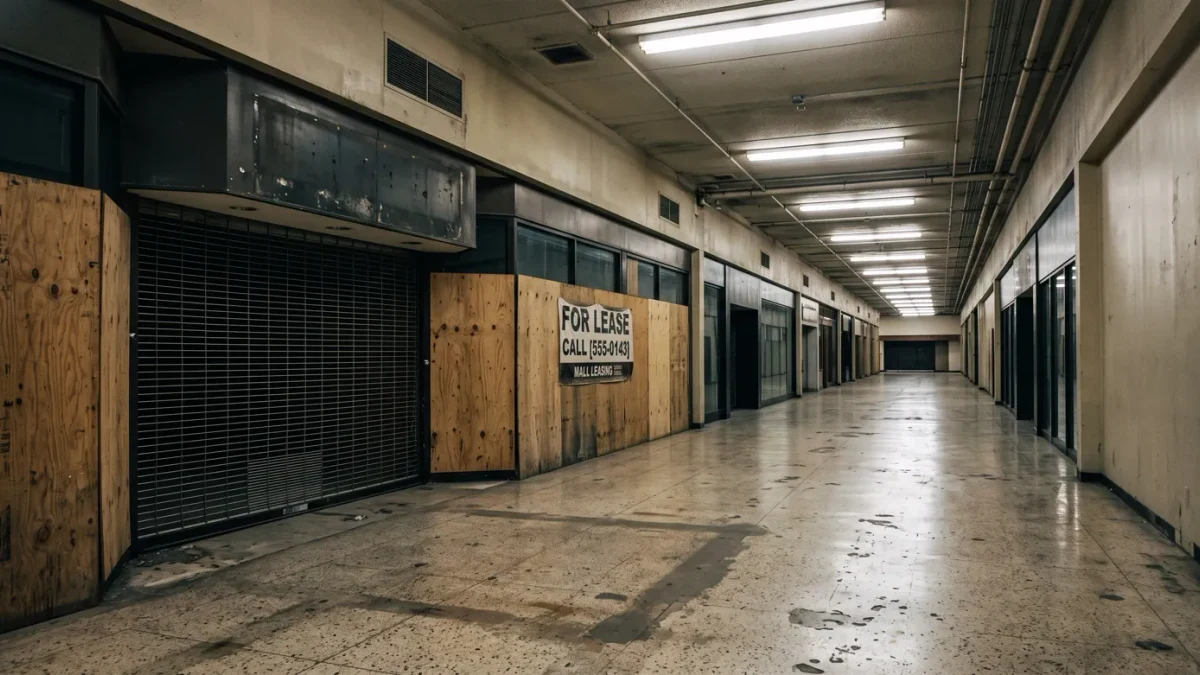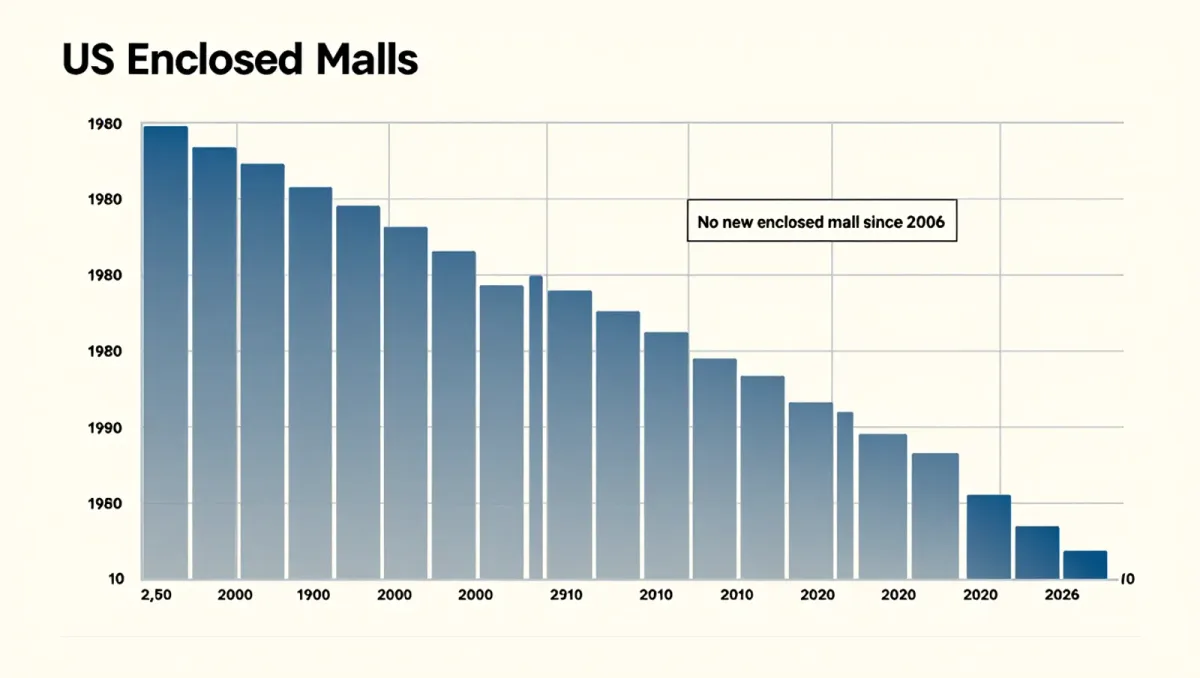
The American enclosed mall shrank from roughly 2,500 in the late 1980s to about 700 functioning malls today, per widely cited industry tracking by the real-estate research firm Green Street and retail analysts, checked April 2026. The causes were stacked: e-commerce took the revenue, department store anchors closed and took their roofs with them, and new construction of enclosed malls essentially stopped after 2006. But the headline hides the split that matters to anyone who shops: Class A malls in wealthy metro areas report occupancy above 95%, while the bottom tier is being demolished or turned into something that is no longer a mall.
This explainer gives you the map: which malls died, which are being converted, and how to tell which kind you are driving to.
Why did the enclosed mall decline?
- Overbuilding. America built more mall square footage per capita than any other country; the model assumed endless suburban growth.
- Anchor collapse. When Sears, JCPenney and Macy's closed hundreds of stores, the anchors' dark boxes dragged traffic and made vacancy contagious.
- E-commerce. The mall's core categories — apparel, electronics, mid-price goods — were the first to move online.
- Format competition. Open-air lifestyle centers and big-box power centers captured the car-borne errand without the roof.
Mall visits and sales concentrated accordingly: sales per square foot at top-tier malls run several times those at the weakest tier, per Green Street and ICSC industry data, checked April 2026 — the winners are winning harder while the losers empty out.
What happens to dead malls?
Demolition or conversion, and the conversions are inventive. Across the US, former malls have been redeveloped into mixed-use projects with apartments, offices, churches, medical clinics, and indoor farms — industry trackers have cataloged hundreds of such mall-to-mixed-use conversions since 2015, checked April 2026. Examples cited in planning literature include the Nicollet Mall district's retail evolution in Minneapolis and suburban conversions like the Bellis Fair and rolling acres-style redevelopments; the pattern, not the site names, is the point: the land under a mall is often worth more than the mall.
Which malls are thriving?
Typical survivor traits, checked April 2026:
- Location in a top-income trade area within a traffic-clogged metro, where the mall is still the convenient retail concentration.
- Anchors replaced by experiences: gyms, food halls, cinemas and pop-up markets instead of department stores.
- Owner investment: the Class A operators (Simon, Brookfield and similar portfolio owners) recycled capital into their best properties and let the rest go — a barbell strategy.
- Tourist or transit access: malls that double as destinations capture visitors who never owned the original suburban promise.
How do you tell a dying mall from a thriving one before you drive?
- Check the anchor list. Two or more closed anchors predict a thin tenant roster.
- Count the vacancies on the map. Mall management sites list tenants; directories with 40%+ empty listings are a warning.
- Read the hours. A mall closing at 6 p.m. on weekends has conceded its customer base.
- Look at the food court. The food court is the mall's vital sign: chains leaving en masse precede the end; local operators arriving signal investment.
Is the mall coming back?
The enclosed mall as a building type is not coming back — no new enclosed mall has opened in the US since 2006, per industry records, checked April 2026. What is returning is foot-traffic retail in new clothes: mixed-use districts, outdoor lifestyle centers and repurposed structures. For the shopper, the practical result is that mall shopping is now a quality-sorting exercise: the best malls are better than ever, and the worst are already gone or going.
The bottom line
About 700 US malls survived the great sorting, and they are the strongest retail real estate in the country. Check the anchors and the directory before you drive — the parking lot at 6 p.m. on a Saturday tells you everything the directory didn't.
What should a shopper expect inside the survivors?
The Class A experience has upgraded quietly: food halls with regional operators instead of chain counters, gyms and medical clinics in the old anchor boxes, full-service grocers, and evening programming that keeps the lights on past 9 p.m. The retail mix skews experiences and services because that is what online cannot ship, checked April 2026. If your memory of malls is a static food court and a Sears, the survivors will read as a different species — closer to a town square with a roof than the mall you remember.